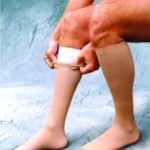
Indications For Medical Compression Garments

Medical Disclaimer: The information provided in this article is for educational purposes only and is not intended to replace professional medical advice, diagnosis, or treatment. Always consult your physician or a qualified healthcare specialist regarding any medical conditions, leg swelling, or circulatory concerns.

Compression
Compression Level (at Ankle) Indications
15 – 20 mmHg
  • Beneficial for air travel
  • Prophylaxis for pregnancy and legs at risk
20 – 30 mmHg
  • Mild varicosities
  • Mild edema
  • Post-operative
30 – 40 mmHg
  • Moderate to severe varicosities, or edema
  • Post operative
  • Post fracture, or trauma related edema
  • Open venous ulcer
  • Adjunctive to thrombotic disease
  • In conjunction with pneumatic and other decongestant therapy to maintain edema reduction
40 – 50 mmHg
  • Severe varicosities
  • Severe edema
  • Severe trauma related edema
  • Open, recurrent venous ulcer
  • Severe Post-Thrombotic Syndrome
  • In conjunction with pneumatic and other decongestant therapy to maintain edema reduction
Contraindications Caution
  • Intermittent claudication other ischemic conditions
  • Congestive heart failure, if uncontrolled
  • Cutaneous sepsis or weeping dermatosis
  • Acute dermatitis
  • Any sign of infection
  • Extensive venous ulceration
  • Allergies or skin sensitivities
  • History of diabetes
  • Neuropathy
  • Non-ambulatory uses, such as confinement to bed unless otherwise prescribed by physician

Please note the above contraindications and cautions


To understand why these garments are so effective, it helps to look at the underlying mechanics of how venous flow and one-way valves keep blood moving upward against gravity.

Leave a Comment

Shopping Cart
Scroll to Top