At first glance, integrating precious metals into everyday hosiery sounds more like an aggressive marketing gimmick than serious textile science. When consumers encounter claims about “metal-infused socks,” skepticism is completely reasonable: Does pure metallic silver actually serve a physiological purpose inside footwear, or is it merely an excuse to inflate retail prices?
In the realm of clinical biophysics and technical knitting, pure silver is not a novelty—it is a proven, workhorse element.
Inside a closed shoe or beneath a rigid orthotic brace, the foot exists in an unforgiving microclimate: elevated humidity, concentrated friction, trapped surface heat, and an abundance of organic nutrients that fuel microbial proliferation. For individuals managing diabetes, peripheral neuropathy, or daily orthotic wear, these conditions present continuous challenges to skin health.
As an American manufacturer with over three decades of specialized knitting heritage, Creative Care does not treat silver as an afterthought or a superficial spray. We engineer it directly into the yarn matrix. Understanding the benefits of genuine silver socks begins by separating temporary surface treatments from permanently bonded, clinical-grade silver fibers—and examining why silver outperforms popular alternatives like copper.
Demystifying Silver: Precision Biophysics vs. Chemical Coatings
The footwear market is flooded with garments claiming broad “antimicrobial” capabilities. However, how active metals—such as pure silver and copper—are introduced into the textile determines whether those benefits endure for years or wash away in your laundry machine.
Mass-market manufacturers frequently rely on topical chemical dipping or spray finishes. In this low-cost process, a finished generic sock is submerged in a chemical bath containing suspended silver salts or microscopic silver nanoparticles. These particles adhere weakly to the exterior of standard threads via superficial electrostatic bonds. Within three to five residential laundry cycles, agitation and water exposure strip the chemical coating away, leaving behind an ordinary synthetic sock while discharging unstable nanoparticles into the wastewater system.
True precision-knit technical hosiery relies on a fundamentally different manufacturing discipline: permanently bonded metallized fibers.
Creative Care integrates X-Static® silver fiber, an advanced textile technology where a layer of 99.9% pure elemental metallic silver is permanently bonded to the surface of a flexible polymer core filament. The silver is not an unstable particulate wash or resin coating—it becomes an intrinsic, structural part of the yarn itself, delivering consistent performance for the entire operational life of the garment.
Silver vs. Copper: Not All Antimicrobial Metals Are Created Equal
As metal-infused wellness apparel has gained popularity, copper-infused threads have emerged as a common alternative on retail shelves. While copper shares broad conductive and oligodynamic characteristics with silver, examining their physical and biochemical behaviors reveals why pure silver remains the clinical standard for technical hosiery.
1. 100% Surface Coverage vs. Embedded Slurries
Most commercial copper socks do not utilize continuous metallic copper filaments. Instead, manufacturers mix pulverized copper oxide (CuO) powder into synthetic polymer slurries before extruding the fibers. Because the copper particles are encapsulated deep within the synthetic core, only a small fraction of the metal ever reaches the outer surface to interact with perspiration and microbes.
In contrast, X-Static® pure silver fiber features a continuous, 100% surface layer of pure elemental metal. The entire exterior of the filament is active silver, ensuring immediate, uninterrupted ionic exchange the moment ambient moisture is present.
2. Thermal Dynamics and Friction Hot Spots
While copper is a respectable thermal conductor (~398 W/m·K), pure elemental silver is the single most conductive metal on the periodic table (429 W/m·K). In precision-knit technical hosiery, this distinction is critical for dissipating localized friction heat generated at high-pressure contact zones. Furthermore, silver has an exceptionally low emissivity rating, allowing it to reflect radiant body heat far more efficiently in cool conditions than copper-doped polymers can.
3. Oxidation, Perspiration, and Skin Tolerance
Copper oxidizes readily when exposed to atmospheric moisture, sweat acids, and skin salts, forming cuprous oxide and basic copper carbonate (the greenish patina visible on weathered metal). Inside the warm, humid environment of footwear, these oxidation byproducts can leach into fabric, discolor socks, and cause contact irritation on hypersensitive skin.
Pure silver oxidizes solely at the sub-microscopic level to release clean, colorless silver ions (Ag+). It produces no irritating mineral salts, will not stain skin or fabrics, and provides proven biocompatibility for fragile skin barriers.
Pure Bonded X-Static® Silver vs. Embedded Copper Threads
| Physical & Clinical Metric | X-Static® 99.9% Pure Silver Fiber | Commercial Copper-Infused Yarns |
|---|---|---|
| Material Form | Continuous 99.9% pure metallic silver layer permanently bonded to fiber surface. | Ground copper oxide (CuO) micro-particles embedded inside synthetic filament cores. |
| Active Contact Area | 100% surface exposure; metal is immediately accessible to moisture and bacteria. | Limited; only sporadic particles exposed at the fiber surface interface. |
| Thermal Conductivity | Highest of all elements (429 W/m·K); rapidly conducts away localized friction heat. | Moderate (~398 W/m·K); compromised further by non-conductive polymer binders. |
| Reaction to Perspiration | Releases pure, colorless Ag+ ions; non-staining and non-irritating to delicate skin. | Prone to surface oxidation and verdigris; can leave greenish residue and irritate skin. |
| Antimicrobial Spectrum | Broad-spectrum ionic disruption across gram-positive, gram-negative, and fungal species. | Narrower efficacy profile; requires higher moisture thresholds to generate active ionic exchange. |
The Antimicrobial Mechanism: How Ag+ Neutralizes Microbes
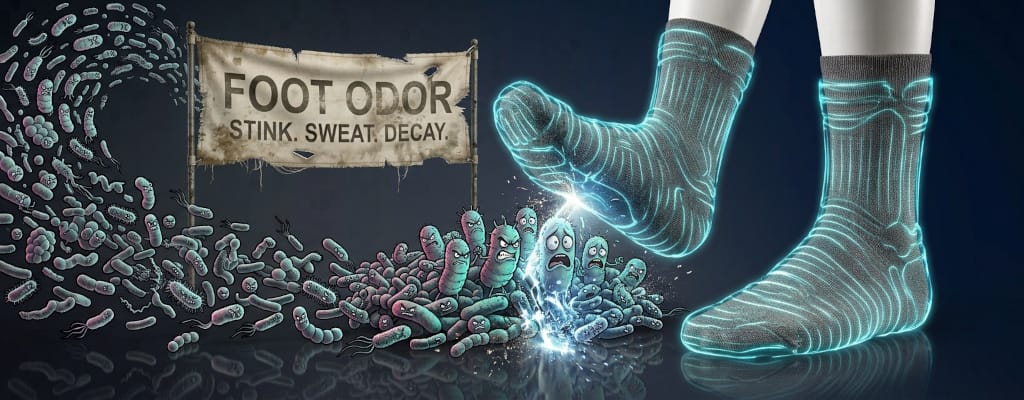
The human foot contains approximately 250,000 sweat glands, capable of releasing substantial moisture during active movement or extended standing. When trapped inside a shoe or an Ankle-Foot Orthosis (AFO), sweat acts as a breeding medium for common bacteria like Staphylococcus epidermidis and Brevibacterium linens. As these microbes metabolize organic acids in perspiration, they produce volatile sulfur compounds—the primary source of persistent foot odor—while altering the skin’s surface environment.
The defense mechanism of bonded silver operates through biophysical mechanics rather than chemical toxins:
- Electrostatic Attraction: Bacterial cell membranes carry a naturally negative electrical charge. The positively charged Ag+ ions are drawn directly to the microbial surface.
- Protein Binding and Cellular Disruption: Once at the cell surface, silver ions bind readily to the sulfhydryl groups (-SH) in essential bacterial proteins and metabolic enzymes. This action neutralizes cellular respiration, inhibits cell wall synthesis, and prevents bacteria from replicating.
- Surface Neutralization: Because the reaction occurs at the physical surface of the knit, microbes are neutralized on contact before they can establish dense colonies.
While antimicrobial silver socks do not replace medical treatment, keeping the fabric interface hygienically clean helps support skin integrity and minimizes friction-induced irritation. This has been observed in clinical practice: an IRB-approved study by Shriners Hospitals for Children found that introducing silver-incorporated knit socks helped improve skin condition and reduce irritation in individuals wearing rigid orthopedic devices for extended daily periods.
How Do the Silver Ions Actually Get Released?
Elemental metallic silver (Ag0) in its solid, resting state is inert and completely stable. It does not continuously vent ions into dry air.
The ionic reaction requires an environmental trigger: ambient moisture and body heat.
When you put on your socks and your foot naturally begins to transpire, the microclimate humidity inside the shoe rises. Dissolved oxygen present in this ambient moisture initiates a micro-oxidation reaction at the immediate surface boundary of the pure silver layer:
4Ag0 + O2 + 2H2O → 4Ag+ + 4OH–
Through this localized oxidation, surface silver atoms shed an electron, converting into soluble, positively charged silver cations (Ag+). These ions enter the liquid boundary layer of moisture surrounding the fibers, activating their antimicrobial defense exactly where and when bacteria thrive.
Will the Silver Ions Ever Run Out?
A common and logical question is whether the silver in the knit will eventually “drain” its ionic charge like a depleted battery.
The short answer is no—the silver ions will not run out during the practical lifespan of the garment.
This longevity comes down to relative physical scale:
- Microscopic Depletion Rate: Antimicrobial action takes place at an atomic level. The amount of silver converted into active Ag+ ions is minuscule—measured in parts per billion and picograms per square centimeter of fabric.
- Massive Elemental Reservoir: Unlike cheap topical washes that contain only microscopic traces of silver salts, X-Static® fibers feature a solid, continuous layer of 99.9% pure metallic silver. Even after thousands of hours of active wear and dozens of laundry cycles, only an infinitesimal fraction of the outer atomic layers has ionized.
- Physical Wear vs. Ionic Life: In certified testing, permanently bonded metallized fibers maintain over 99% antimicrobial efficacy even after 50 to 100+ standard washings. In practice, the base yarns of the sock—the elastane and structural nylon—will succumb to ordinary friction and wear out years before the metallic silver layer exhausts its ability to generate ions.
For individuals with delicate skin, this ionic barrier provides reliable, enduring support. While antimicrobial silver socks do not replace clinical medical treatment, keeping the fabric interface hygienically clean helps support healthy skin integrity and minimizes common avenues for secondary dermal irritation.
The Thermodynamic Advantage: Regulating the Microclimate
Beyond antimicrobial defense, metallic silver possesses an exceptional thermodynamic property: it has the highest thermal conductivity of any elemental metal (429 W/m·K). In medical-adjacent hosiery, this high conductivity transforms how heat moves across the surface of the foot.
1. Dissipating Localized Friction Hot Spots
During walking, repeated mechanical friction inside footwear creates concentrated areas of thermal buildup—particularly along the metatarsal heads, the heel pad, and bony prominences. In individuals with peripheral neuropathy, sensory nerve changes can dull the perception of temperature and shear stress, meaning localized “hot spots” can build without the wearer feeling an immediate warning ache.
Silver knits conduct thermal energy along the axis of each fiber. Instead of remaining concentrated over a high-friction site, excess heat is drawn laterally away from hot spots and distributed across a broader surface area of the sock, allowing it to dissipate into the shoe’s open spaces.
2. Radiant Warmth in Cool Microclimates
Conversely, silver exhibits exceptionally low thermal emissivity. In cooler environments, the metallic fibers reflect radiant body heat back toward the skin rather than allowing it to escape through the knit. This dual-action thermodynamic regulation—conducting heat away during physical movement while reflecting radiant warmth when at rest—helps maintain a balanced, stable foot environment.
Precision Engineering: Creative Care Silver Collections
A high-performance technical fiber is only as effective as the knit structure that houses it. As a dedicated manufacturer, Creative Care combines X-Static silver fiber with anatomical construction techniques designed to minimize physical stress on the foot and lower limb:
- Low-Profile Flat-Linked Toe Seams: While our dedicated SeamFree™ socks utilize a patented method of knitting socks without seams, our silver-infused styles are built with ultra-flat, mechanically linked toe closures. Standard socks use bulky, overlapping overlock ridges that rub against toe joints. Our precision flat-linking sits flush against the toes to minimize friction points and pressure lines.
- Ultra-Stretch, Non-Binding Tops: Traditional socks rely on tight elastic bands that bite into the calf, leaving deep indentations and restricting venous return. Our turned-welt, relaxed-stretch cuffs stay securely in position without constricting circulation.
- Dual-Layer Moisture Transport: We pair bonded silver with high-performance wicking yarns to continuously draw perspiration away from the skin surface, supporting comfortable wear all day long.
Explore Our Clinical-Grade Silver Knits:
- SilverMax™ AFO Liner Socks: Engineered as an ultra-smooth interface beneath rigid orthotic braces. SilverMax™ combines form-fitting, wrinkle-free core stretch with X-Static® pure silver to defend against brace-line chafing, manage moisture, and neutralize odor under rigid plastic bracing shells.
- Healthy Soles™ Collection: Our premium dress-style wellness sock designed for daily protection. Blending high-performance moisture transport with pure silver fibers, a non-binding cuff, and a dye-free footbed, Healthy Soles™ delivers all-day fatigue relief and odor control for professionals, travelers, and sensitive feet.
Fabric Care Advisory: Protecting Your Silver’s Ionic Defense
To ensure your silver-infused knitwear retains its antimicrobial and thermodynamic capabilities for the full life of the garment, proper laundering is essential.
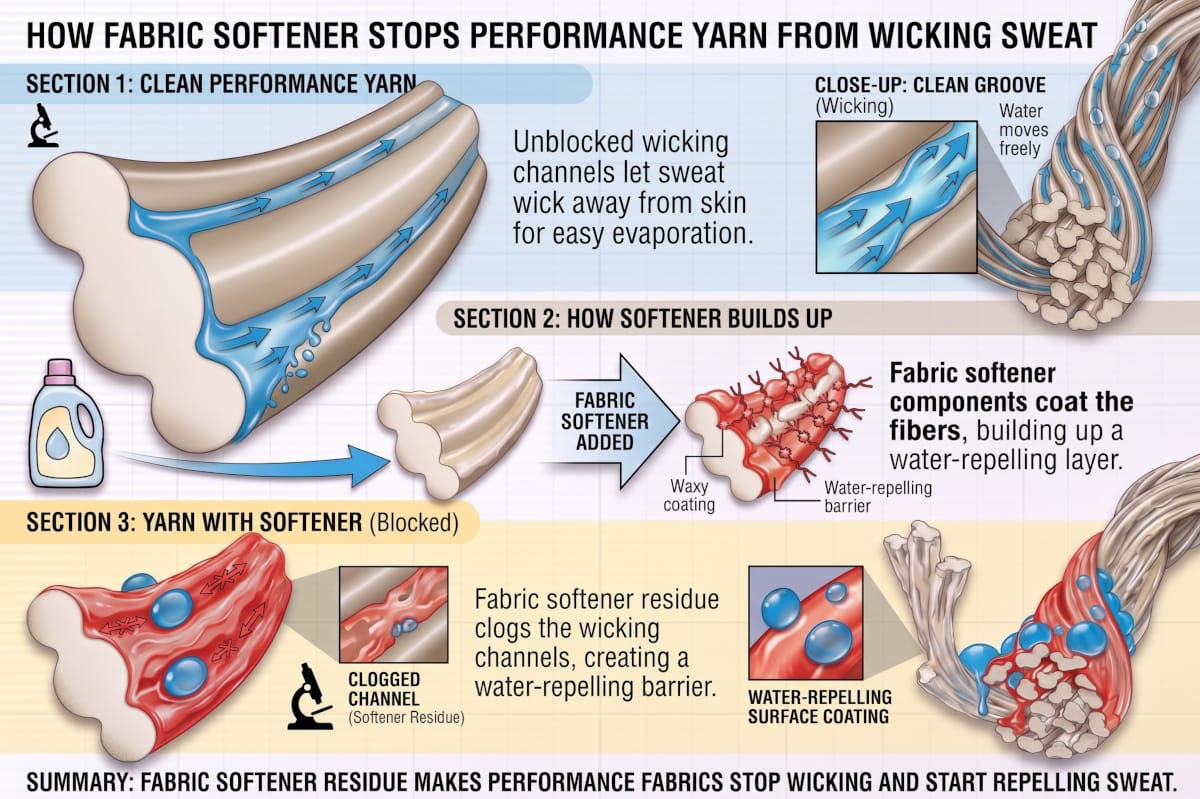
The single greatest hazard to technical silver apparel is liquid fabric softener and dryer sheets. Softeners deposit a thin, lubricating film of silicone oils and waxy cationic surfactants across textile filaments. This waxy coating insulates the metallic silver from ambient moisture which prevents the release of active Ag+ ions, blunting thermal conductivity, and trapping odors inside the synthetic knit.
For a complete breakdown of how silicone residues compromise technical fibers (and how to strip them out using a gentle vinegar wash) read our comprehensive guide:
👉 The Laundry Trap: Why Fabric Softener Destroys High-Performance Yarns and Orthotic Knits
As a quick rule of thumb: wash your silver socks in cold or warm water with a mild, clean-rinsing detergent, skip the bleach and softeners, and tumble dry on low heat or line dry.