That fresh fragrance and silky post-dryer feel might seem like the hallmark of clean laundry, but if you are laundering technical knitwear, fabric softener is quietly sabotaging your gear.
Whether it is a pair of non-binding socks, an AFO brace liner, or a form-fitting Bracemate® torso sleeve, medical and athletic garments rely on microscopic textile engineering to regulate heat, combat bacteria, and transport sweat away from the body. Adding liquid softeners or dryer sheets coats that delicate engineering in a waxy, water-repelling barrier.
The Micro-Architecture of Technical Yarns
Specialized fibers are designed to solve specific physiological challenges:
- CoolMAX® Capillary Channels: Unlike traditional round synthetic fibers or absorbent cotton, CoolMAX® features an engineered cross-section with longitudinal micro-grooves running along each filament. These grooves act as microscopic conduits, utilizing capillary action to pull perspiration off the skin and disperse it across the garment’s exterior surface for rapid evaporation.
- X-Static® Pure Silver Fiber: This technology permanently bonds a layer of 99.9% pure metallic silver directly to the surface of the textile fiber. In garments like silver-infused socks and AFO liners, silver actively releases ions that neutralize odor-causing bacteria, inhibit fungal growth, and conduct heat away from hotspots.
- Multi-Directional Elasticity: In products like Bracemate™ Body Sleeves and gradient compression wear, high-recovery elastane blends ensure a snug, wrinkle-free interface that prevents friction blisters beneath rigid orthotics.
How Fabric Softeners Sabotage Performance
Fabric softeners and dryer sheets do not clean fabric; they deposit a lubricating chemical film—primarily composed of silicone compounds and waxy cationic surfactants—over textile fibers.
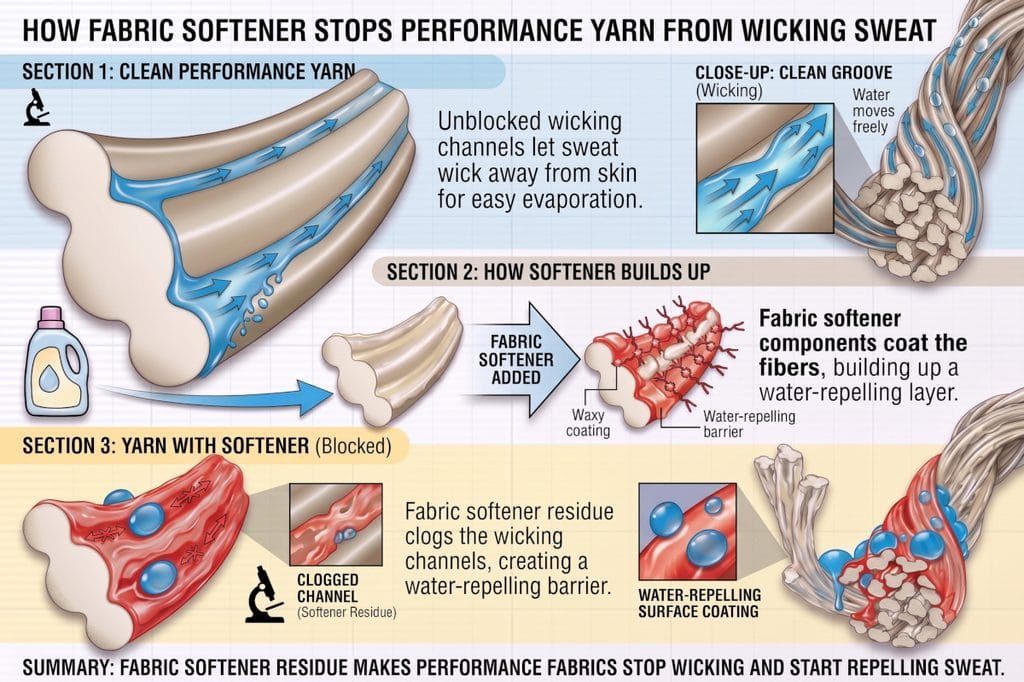
- It Clogs Capillary Grooves: The waxy residue settles directly into the micro-channels of CoolMAX® fibers. Once these conduits are blocked, the capillary draw fails completely.
- It Turns Wicking Fabrics Hydrophobic: Softener coatings are water-repelling. Instead of absorbing and transporting perspiration, the treated fabric forces sweat to bead on the surface, trapping moisture directly against your skin.
- It Deactivates X-Static® Silver: X-Static® relies on direct physical contact between the metallic silver surface and ambient moisture to release antimicrobial ions. Fabric softener blankets the silver in an insulating chemical sleeve, neutralizing its antibacterial defense, locking in odors, and reducing its thermal conductivity.
- It Weighs Down Elastic Memory: Surfactants build up inside elastic knits over time, degrading elasticity and leading to loose, sagging fabric that bunches and causes pressure points under braces and footwear.
The Real-World Impact: Why Moisture Trapping Matters
When technical garments stop breathing, the consequences go beyond minor discomfort:
| Garment Type | Primary Material Benefit | What Happens When Softener Is Used |
|---|---|---|
| Bracemate® Body Sleeves | Continuous torso sweat wicking under rigid TLSO or scoliosis braces. | Perspiration stays trapped against the trunk, causing heat rashes, skin maceration, and severe friction burns along brace trim lines. |
| AFO & Orthotic Liners | Wrinkle-free cushioning and moisture management inside rigid plastic leg braces. | Sweat pools inside the brace boot, increasing skin breakdown risk and accelerating bacterial growth. |
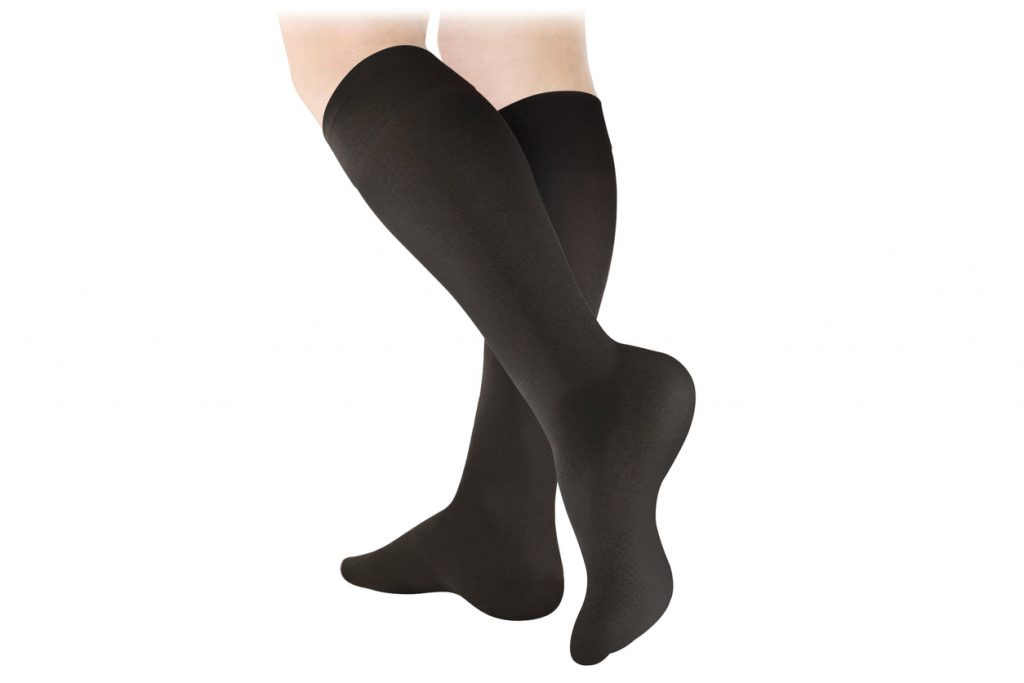
| Silver-Infused Hosiery | Natural antimicrobial protection, thermal balance, and odor elimination. | Silver ions are blocked by wax; socks lose anti-odor properties and harbor bacterial colonies. |
| Everyday Comfort Socks | Friction reduction, dry micro-climate, and blister prevention. | Damp skin softens and weakens, leading to hotspots, chafing, and painful blisters during long work shifts. |
Proper Care Guidelines for Technical Apparel
Maintaining peak performance in medical and active knitwear requires straightforward laundering practices:
| What to Do | What to Avoid |
|---|---|
| Mild Standard Detergents: Clean-rinsing formulas wash away fully without leaving residues behind. | Liquid Softeners & Dryer Sheets: Coats fibers in hydrophobic wax and deactivates technical properties. |
| Cool or Warm Wash Cycles: Preserves the structural tension of elastane and technical polymers. | Chlorine Bleach: Chemically attacks and dissolves spandex fibers, destroying non-binding tops and elasticity. |
| Low Heat or Air Drying: Extends the working life of specialized synthetic blends. | High Dryer Heat: Can warp micro-grooves and degrade elasticity. |
How to Strip and Restore Coated Performance Gear
If your technical garments have accidentally been laundered with fabric softener or dryer sheets, you can remove the residue:
- Wash with White Vinegar: Place the affected garments into the washing machine with your standard mild detergent, and add one cup of distilled white vinegar to the rinse cycle (or fabric softener dispenser).
- Break Down Surfactants: The mild acetic acid in white vinegar dissolves stubborn cationic surfactant and silicone buildup without compromising silver bonding or polyester filaments.
- Air Dry or Tumble Dry Low: Once dried cleanly without additives, the wicking micro-grooves and silver contact points will be completely unblocked and restored to full performance.