Tales From The Lint Trap
Every October, ghost stories emerge about haunted houses, eerie shadows, and mysterious footsteps in the attic. But for most households, the most terrifying haunted space isn’t the attic – it’s the laundry room.
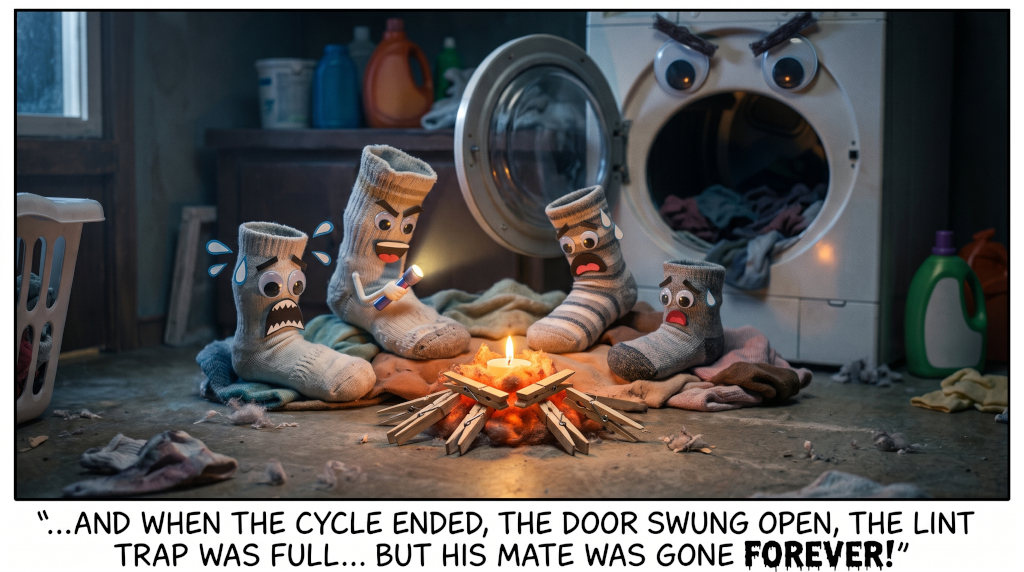
You toss in an even number of matched pairs, slide the timer forward, and wait for the buzzer. When you open the hatch, an odd sock sits completely alone on the rim. Its mate is nowhere to be found.
Did the machine consume it? Did it cross over into a parallel textile dimension?
Before you call a paranormal investigator, let’s unpack the real physics behind the legendary “sock-eating dryer,” where missing laundry actually hides, and the far more sinister laundry room horror that might be ruining your favorite pairs.
The Forensic Reality: Where Do Socks Actually Vanish?
As much as we love the image of an appliance secretly snacking on cotton, washing machines and dryers don’t literally digest fabric. When a sock goes missing in action, it is usually the victim of simple physics:
- The Rubber Gasket Trap: Front-loading washers and dryers feature a thick rubber door boot (gasket) designed to seal the drum. During high-speed spins, smaller garments like ankle socks or lightweight liners can easily be forced through the gap between the drum edge and the gasket, slipping down into the internal drain pump or the machine cavity.
- The Fitted Sheet Vortex: The deep elastic corners of fitted sheets and duvet covers act like laundry nets. As the drum tumbles, larger linens swallow smaller items, rolling them into a tight fabric burrito that doesn’t release its prisoner until weeks later.
- The Appliance Abyss: In many laundry rooms, socks don’t vanish inside the machine—they make a break for it over the back edge. A single drop between the wall and the machine can leave a sock stranded in dust-bunny exile for months.
- Static Cling Stowaways: Synthetic fabrics build up high electrostatic charges in dry heat. Often, that “missing” sock is simply clinging flat against the inner sleeve of a fleece sweatshirt or hiding inside a pant leg.
The Real Laundry Room Nightmare: Heat and Dryer Sheets
While losing a sock is annoying, the true danger lurking inside your dryer isn’t disappearance – it’s structural damage.
High-performance hosiery (including non-binding medical socks, AFO liners, and graduated support wear) relies on technical elastane, specialized circular knits, and moisture-wicking channels. Tossing them into a scorching dryer cycle creates two invisible hazards:
1. Baked-Out Elastics
Non-binding tops and turned-welt cuffs are specifically engineered to grip the leg gently without digging into sensitive skin or restricting venous flow. Extreme tumble heat acts like an oven for fine micro-elastic threads. Over time, high temperatures degrade and melt the elastane core, leaving you with saggy, loose cuffs that bunch around your ankles.
2. Waxy Residue Buildup
See our blog post about The Laundry Trap: Why Fabric Softener Destroys High-Performance Yarns and Orthotic Knits
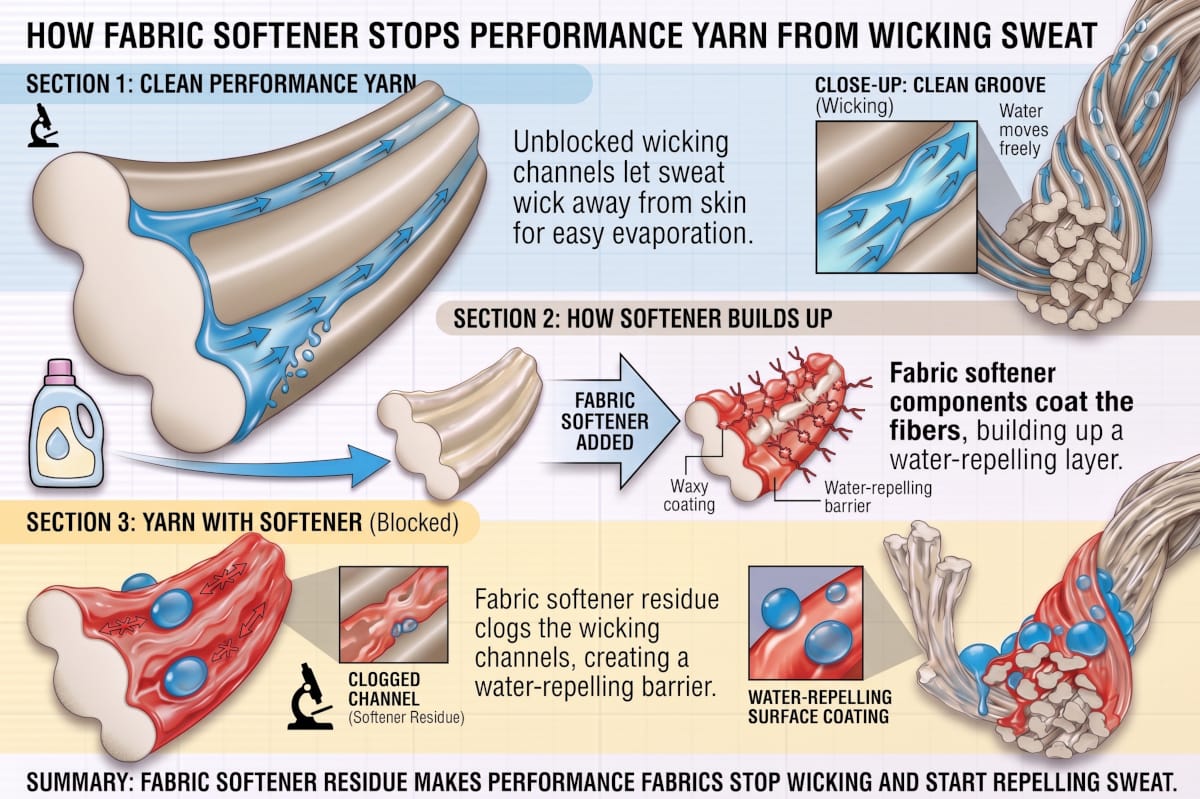
Dryer sheets and conventional liquid fabric softeners work by coating fabric in a thin, waxy layer of silicone and fatty compounds. On technical moisture-wicking fibers (such as CoolMAX® or performance blends), this waxy film clogs the microscopic channels between yarn fibers. Instead of wicking moisture away to keep skin dry and prevent maceration, the coated sock traps perspiration against your skin.
The Laundry Survival Guide: 4 Rules to Protect Your Pairs
You don’t need an exorcism to keep your laundry intact—just a few simple adjustments to your laundry routine:
- Wash in a Mesh Garment Bag: Wash your socks inside a zippered mesh laundry bag. This keeps pairs together through both cycles and eliminates any possibility of small socks slipping past the door gasket.
- Tumble Dry on Low (or Line Dry): Keep dryer settings on gentle or low heat to protect the elasticity and shape of non-binding cuffs. Whenever possible, air-drying expands the working life of specialized yarns.
- Ditch the Dryer Sheets: Skip commercial softeners. If you want soft socks without waxy residue, add a half-cup of distilled white vinegar to your washer’s rinse cycle. It breaks down leftover detergent salts and neutralizes odors without compromising moisture transport.
- Look to the Seam to Solve the Match Game: When sorting a mountain of clean laundry, squinting at heel wear or tiny labels takes forever. That’s why we knit a color-coded toe seam into our socks. Even if laundry chaos strikes, matching the colored thread instantly identifies the exact size and model in seconds—putting an end to the “orphaned sock” mystery for good.
No Tricks, Just Comfortable Feet
This Halloween, keep your eyes on the laundry basket, your dryer setting on low, and your socks properly paired. With a little extra care, your socks will stay soft, supportive, and safe from the monsters under the lid.